Sunday, September 14, 2014


Sunday, June 29, 2014
Solitude v. Community

Solitude allows the contemplation of a deeper reality, which the distractions of everyday busy life do not allow.
Solitude allows there to be personal authenticity, so we can know who we are and not just who we seem to be before others.
Solitude develops self-discipline and self-reliance, which leads to self-empowerment.
And, it is said, solitude alone can give us the peace of mind and reflection to consider how best to act and live.
Others consider Solitude to be a danger.
Alone, a person has no real purpose or focus, but instead only falls deeper into the self which is an empty hole.
Solitude leads to madness, fear of others, paranoia and self-delusion.
In fact, they say, the right way to live can only be discovered with others. Without others, we cannot love, we cannot be faced with uncomfortable truths, and we cannot build on other's strengths.
If we are to be our real selves, we discover that self by connecting in community. Without community, we are only a shadow of our deepest selves.
Some say that our lives and communities should be a balance between solitude and community.
Too much solitude or too much community is dangerous. In solitude, we cannot empathize. In community, we can become numb from overwhelming empathy.
Some gain much from solitude, while others gain nothing from constant relation in community. Different people are different. To say that only one is beneficial is like saying that it is a moral requirement for everyone to be married or for everyone to be single.
There are different purposes for each activity. Community teaches us love. Solitude gives us the opportunity to consider pure truth. In the balance of these two activities is the real truth.
What do you think?
Sunday, June 15, 2014
Impossible Questions

At a move theatre, which armrest is yours?
At what point does a day stop being partly sunny and become
partly cloudy?
What would happen if Pinocchio said, "My nose will grow longer!"?
What would happen if Pinocchio said, "My nose will grow longer!"?
If vampires can't see their reflections, why is their hair
always so neat?
What do you do when you see an endangered animal that is
eating an endangered plant?
Is it rude for a deaf person to sign with food in their
hands?
Can a short person talk down to a tall person?
What was Captain Hook’s name before the alligator bit off
his hand?
Do graveyard caretakers get a cost of living increase?
Why are builders afraid to have a 13th floor but book
publishers aren't afraid to have a Chapter 11?
If you ate pasta and antipasti, would you still be hungry?
Can an illiterate person really appreciate alphabet soup?
If there's an exception to every rule, is there an exception
to that rule?
Why is it that when a person tells you there's over a
million stars in the universe you believe them, but if someone tells you
there's wet paint somewhere, you have to touch it to make sure?
Aren't all generalizations false?

How do you treat someone addicted to counselling and
self-help groups?
If women ran the Pentagon, would missiles and submarines be
shaped differently?
Why is abbreviation such a long word?
Why isn’t phonetic spelled like it sounds?
Shouldn’t monosyllabic be shorter?
Should burn victims get a discount at a crematorium?
If electricity comes from electrons, does morality come from
morons?
How much deeper would the ocean be if it had no sponges?
If quizzes are quizzical, then what are tests?
When the police arrests a mime, do they tell him he has the
right to remain silent?
If the world didn't suck, would we all fall off?
What does it make me when someone calls me gullible and I
believe them?
If a deaf person is taken to court, is it still called a
hearing?
How important does a person have to be when they are no
longer "murdered" but "assassinated"?
What if the hokey-pokey really is what it's all about?

Sunday, January 26, 2014
Seeking God
Many of us desire to find God, and some spend their whole lives just doing this. But why? Is God so the center of the meaning of our lives that we should be seeking Him? Is God the Source we should be seeking, or is there another Subject that is more true, more to the core of our being? Some have said that we should not be seeking God, but ourselves, humanity, reality, love, economic stability, truth, power.... If we find God will we find all these as well? If we find these will we find God?
Is God even an object to be discovered? We can discover most things within our own universe, eventually, but if God is outside of our universe, then can we truly discover God? Can we only describe God through what God is not, because we cannot see or measure what God is? Is it possible to describe or communicate God at all, if God is beyond our imagination?
 What would be the tools to discover God? If God is beyond human comprehension, then perhaps God is the only one to describe what or who God is. But what is this revelation in which God describes God? Is it creation, made by God, but ravaged by time? Is it physics, the building blocks of creation? Is it the human mind, the most sublime creation? Is it a text in which God laid out the most important thoughts about God? Is it a person, who communicated God most sublimely through both words and action?
Who are we to make such choices? Can we grab onto one of these tools and call it the ultimate revelation? Or should we live our lives and hope that God is some rock that we will stumble upon and everything will make sense? Is such a search ultimately futile or fruitful?
Is God even an object to be discovered? We can discover most things within our own universe, eventually, but if God is outside of our universe, then can we truly discover God? Can we only describe God through what God is not, because we cannot see or measure what God is? Is it possible to describe or communicate God at all, if God is beyond our imagination?
Who are we to make such choices? Can we grab onto one of these tools and call it the ultimate revelation? Or should we live our lives and hope that God is some rock that we will stumble upon and everything will make sense? Is such a search ultimately futile or fruitful?
Sunday, December 29, 2013
What is Your Relationship to Truth?

Stephen Crane writes:
"Truth," said a traveller,
"is a rock, a mighty fortress;Often have I been to see it,
Even to its highest tower,
From whence the world looks black."
"Truth," said a traveller,
"Is a breath, a wind,
A shadow, a phantom;
Long have I pursued it,
But never have I touched
The hem of it's garment"
Are you more like the first or the second traveller? Or is your relationship to truth different than either? What is your experience?
Perhaps truth is more of an archipelago, where you travel to one island, only to find a larger island behind it?
Perhaps truth is a library, where there are so many opinions and detail that cannot be measured, but there is no determining factor between them? Even the distinction between "fiction" and "non-fiction" get us no closer to truth.
Perhaps truth is a dense, rich book, written in another language, which we cannot understand, nor learn?
Perhaps truth is a pool, in which one swims daily and is refreshed?
Perhaps truth is a dream in which one sleeps and rests, but when awakened both the substance and the content of the dream can no longer be grasped?
What do you think?

Thursday, December 26, 2013
The Nature of Natural Love

So many-splendored that we can't even decide what it is. Is it romance, is it desire, is it benevolence, is it self-surrender? Is love a singular idea, or a complex of ideas that we give one overly-simplistic name? We have covered some of this ground in the topic "What is love?" but there is still much controversy to discuss.
Love is the connection between ourselves and the other. Can that connection be anything apart from self-interest? Is there truly love in altruism? Is our deep and abiding care in another really be about them, or is it all about ourselves? Is love, in the end, simply meeting our own desire, or can it ever be purely about the other? Even the hero who sacrifices her own being for the other, is it really about the other purely, or is it about the self's desire to perpetuate the other at all cost? Is it about the self's reputation? Or is there a chance, a moment in which the self is forgotten and the other is the pure focus?
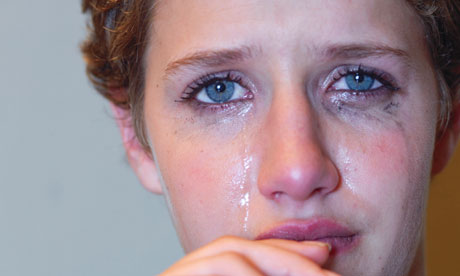
Is love an emotion, which we cannot control? Is love simply a spark, an overwhelming urge that we are led by? Or is it an act of volition, a decision that we make? Or are different kinds of love of different natures? Perhaps we cannot decide who we fall in love with, but we can determine who we give affection to? Or is love a habit, one that we decide at first and then it becomes so overwhelming that we can no longer control it? Is love ultimately addictive?

Monday, November 25, 2013
What is the Logic of Hatred?

Operating on the assumption (which may not be reasonable) that there is a logic to hatred, what might that reasoning be?
Is hatred simple retribution? A gang member is killed in a fight, so the grieving gang must get revenge on the gang who killed, which leads to revenge back. This leads to a perpetual feud and mutual hatred between the groups. It is "eye for an eye" gone out of control.
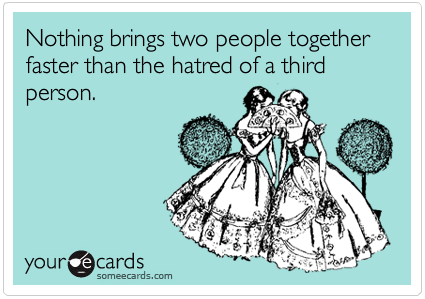
Could hatred be the result of fear? The connection between fear and anger has long been noted, that one tends to be angry at what one is most afraid of. This is especially true when one's security is threatened (or imagined to be threatened), and so one reacts with hatred to that which is assumed to cause insecurity or threatens. Certainly Hitler feared the Jews and assumed that they had power to economically control Germany's destiny, which the Nazis feared, thus fueling their hatred.

Or is hatred simply without reason? We draw up excuses for why we hate another but the actual reason for hatred is lacking, it being just an anger that cannot be controlled?
Subscribe to:
Posts (Atom)