Tuesday, December 27, 2016

All You Need is Love?

"The Beatles said, 'All you need is love,' and then they broke up." -Larry Norman

Love is the answer.  All we need is the air that we breathe and love. 

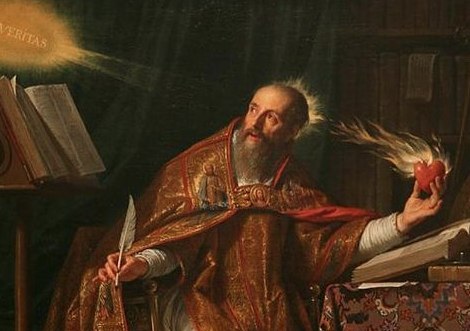
Love is great, everyone agrees.  The world would be different if we just had more love.  But give it a little thought, and it seems much more complicated than Augustine's statement, "Love and do as you please."
What do we mean by "love"?  Most of the songs speak about romantic love, and we, who are no longer teenagers, know that hormonal infatuation has a limited staying power, not sufficient for a single couple to stay together, let alone a universal norm.  And desire only works for people who are desirable. 


Do we mean a religious intuition, or worship of a higher being?  Experience will tell us that love of a higher being does not often translate to a greater love of people around us.  Some will say that love of a higher being provides a model of loving other humans, but the two loves seem remarkably different.  One is the placement on a pedestal, like a ceremonial king or celebrity, while the other is benefiting on a very different level.


Perhaps benefiting is a better idea of what love is.  A love event is to leave a being better off than before the event.  A simple example would be a hungry person.  Everyone needs to eat, to give a hungry person good food is to leave them better off, thus is an act of love.

But it is one idea to think that this is a model for an individual ethic, another to consider this a universal one.  



First, how do we know what really benefits another?  Think of how often a diagnosis session goes wrong.  A professional who has studied how best to love a person and the person themselves often does not know how best to benefit them.  The professional can mislead the individual who might know what they really need  ("You need this medication and you'll feel better", ignoring the side effects that might kill them).  The individual might ignore the professional's wise advice ("You should quit smoking," is more often ignored than taken heed). Or both the professional and the individual might be ignorant as to how to best benefit them. 


We could limit ourselves to what we know what benefits another, to Maslow's list of absolute needs.  Sleep, food, clothing, warmth, security, respect, human contact, achieving one's potential...  However, we can't all agree on what basic needs are.  The drunk says he needs a beer.  The moralist says he doesn't, and that he'd be better off without a beer.  However, the drunk is probably right.  All things being equal, if a drunk doesn't get a beer, he could have a seizure and die.  He doesn't need a beer once he's under medical attention, but apart from that we can't tell him what he really needs from our own limited experience.  A person of a non-normative gender says they need to be accepted for who they are, but the conservative world doesn't agree.  The non-normative gender person might commit suicide because of her society only gives her disrespect.  Normative needs aren't enough for love, not always.


Is love really enough? Having love as the only norm also implies that individual action is sufficient.  But if every single person worked at understanding the person in front of them, providing a need, then that would not be sufficient to meet everyone's needs. There are pockets of people who collect because of their needs, excluded from society.  For instance, a group of people who are isolated because they have a sexual deviant tag and so can only live in a certain part of a town.  They cannot benefit from a universal norm of love, because there are too many individuals they are separated from.  Love has to be more than an individual impulse, but an impulse in government, employment, the justice system and families.


But can love be a universal norm for all societies? What about those who do not act on an impulse of love?  Right now, love is not a norm and we are taught to live by competition and rejection or else we cannot function in society.  How can we have security unless we also ignore an impulse to love, at least to a limited degree?  Isn't self-defense a rejection of love, but isn't it also necessary?  What kind of safeguards would we have to put on a society that acts exclusively on an impulse of love?

Image result for love fear
What about fear?  Fear is the love-killer, that which forces us to ignore the impulse to love to secure ourselves, our families, our "loved" ones.  Do we have layers, in which we love certain people, but not others? Is it possible or positive to love everyone?  Or should we divide people into those we love and those we do not?  Do we have a moral obligation to love everyone? 


But if we leave anyone out of the moral norm of love, then do we not create enemies?  Even as we do not always know how to benefit another, we do not always know who we should fear and who we shouldn't.  If we exclude someone who does not deserve to be excluded, then we create an enemy that doesn't deserve it and then we are creating hate, not love.  How do we love people whom we have made an enemy?  Should we fear all of people, or only fear people in certain contexts?  Can we create a context in which we block them from our vulnerabilities, but love them in other areas?
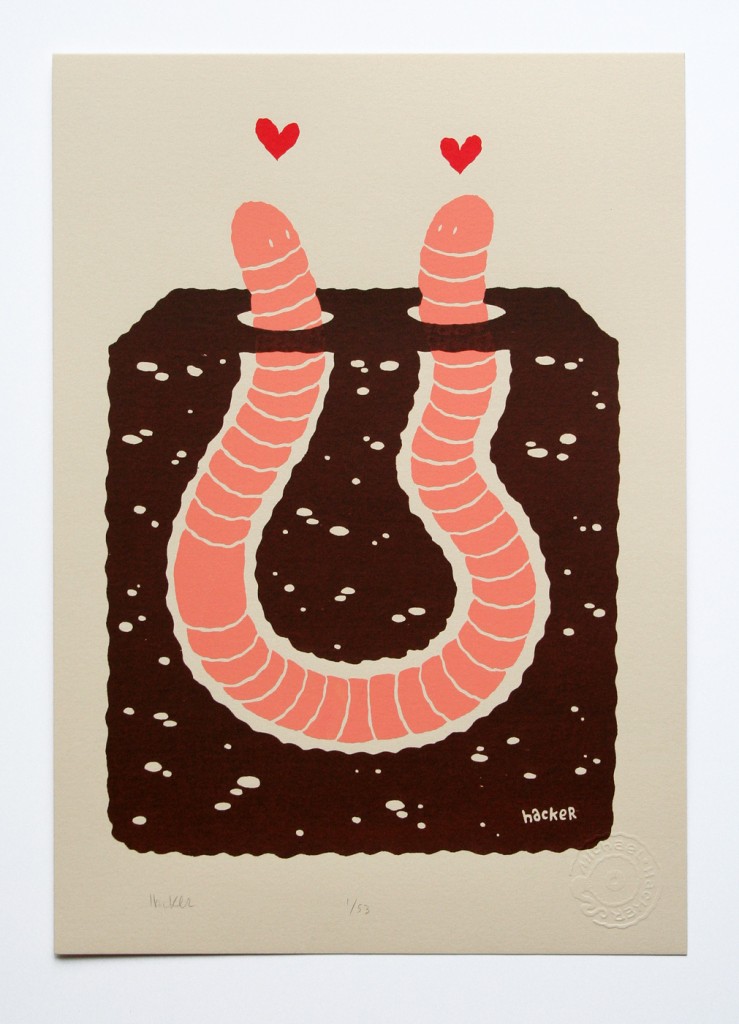

What is our human ability to love?  Love is hard work, and we work against our impulses to fear and to rage.  How long can we keep that up?  How do we love when that love exhausts us?  Should we continue to love when love burns us out?  Do we get periods in which we do not love?  Should we prioritize love of ourselves, making sure that we are cared for before we put ourselves out to love others?  If that is the case, how cared for should we be?  If we are waiting to feel fully supported and full of energy, will we ever love?


Sunday, December 11, 2016

The Meaning of Life

In most modern philosophy, we begin in a place of radical skepticism.  What if nothing was what we thought it was?  What if all the concepts we lived with, the most significant foundations of our lives didn't actually exist at all?  What if there was no life after death, no soul, no God?  What if there was no real basis for any authority, any social structure?  What if, in reality, there is no meaning to ourselves or anything around us?  How then should we live?  How could we live?

And it's no wonder people don't like reading philosophy.  That's pretty depressing.  Everything we spent our lives on, meaningless.  In the end, nothing.  For the most part, however, philosophy doesn't end in this place.  It tries to build reality from this place in order to establish meaning.  From this place of nothingness, we could establish our meaning.

One option is to just remain in that place.  Okay, so there's no meaning?  Fine, I can live with that.  Or I can't.  It doesn't matter, either way, for all of life is absurd, a silly game, without significance.  So is life, our relationships, our parents, our own existence just an illusion, a smoke-in-mirrors trick?  Or is life so short... the whole existence of humanity and biological life such a brief blip in the history of the universe so quick that our activities aren't worth pursuing or exploring?  If this is the case, what are the options?  Suicide? Lethargy? Reading the same opinion over and over again?

This is the point that most bring in Sarte. In summary, Sarte agrees that there is no meaning in life, but we must create our own meaning.  The true meaning is what we make, based on who we deeply are.  We seek who we are and develop our lives around that.

Are we significant enough to do this?  Well, we are knowledgeable enough to know how small we are, how briefly we live, in the scope of the universe.  We may not be significant to change the course of a solar system, but we can be significant enough to shape ourselves to be in an image of our choosing. This is knowledge and talent that no other life or entity has ever had in all of existence (so says our radically skeptical nature).

So who are we?  Are we religious? Then let us embrace religiosity. Are we sexual? Then let us embrace those pleasures.  Are we consumers of good food?  Are we active? Are we competitive?  Are we depressed?  Are we lovers of power?  We can follow those paths.

As human, however, we find that a single description doesn't suit us.  Each of us is a weave of various threads, a city within a single mind. Every one of us consumes good food, desires human connection, fears threats, wants peace, wants control over our lives.  So this requires wisdom and balance for us to live even a life without meaning.

But is our life without meaning if we speak of balance?  Is there meaning in pursuing knowledge, even if that knowledge dies when we pass on? Is there a meaning in sexual pleasure if that leads to an ongoing relationship and family and continuing generations?  Is our real problem finding a meaning only if our meaning can be cosmic?  Isn't there meaning in raising a single child, even if that child lives a short, insignificant life?  Isn't there enough meaning for that child?

Does a deer in the forest consider their lives without meaning?  No, why should she?  Nor is she filled with despair when she looks at the cosmos, that is meaningless to her.  Even if we have greater understanding of the cosmos, does that mean that we must reject the meaningfulness of the doe, simply because we are human?  The doe exists for herself, for her children.  Can we not pursue that meaning, and find that it is sufficient?

The meaning that we have as humans is not, for most of us, to be found in knowledge of the cosmos, but in other humans.  We see others, and they are a part of ourselves, we are a part of them.  The more we spend time with another human, the more a part of us they are.  This is the function of mirror neurons in our brain, which humans seem to have more developed than other animals.  We can identify not only with other humans, but certain other animals, non-living object and fictions.  This function is a deep part of our meaning.

So should we not explore others, and how they create meaning in us?  Should we not pursue social groups, compassion, love, romance, entertainments, beauty? Should we pursue acts of the human future-- politics, activism, opportunities?

Is there not meaning in the small, as well as the large?


Monday, May 30, 2016

Are Miracles Possible?

Definitions are important.  David Hume defined that a "miracle" is that which is in opposition to the natural laws of the universe.  He defined the "universe" to be all that is, and that the laws are how they ran.  A miracle, by that definition, would be in opposition to reality.  Therefore nothing.

But a standard definition of "miracle" wouldn't be understood that way.  A "miracle" might be understood to be the action of a power of reality ( a subgroup of all that exists) that is beyond the perception of humanity to explain.  Then a miracle would just mean that the universe contains more than humanity can see.

Science has no problem with this.  They admit that gravity exists, but they do not know how or even how it works or where this force comes from. No one would call gravity a "miracle", because it follows certain predictable laws, but perhaps the origin of gravity is.  It is certainly beyond human comprehension.

A chronically ill person is sick, they are prayed for and then they are healed.  Is that not a miracle, whether you believe in God or not?  We experience hope with no reason to found it on and our hope is realized.  Is that not a miracle?  Science claims humanity will cease by a certain date, but humanity continues.  Is that a miracle, or simply progress?

The problem of a miracle is when we take a event or experience that is beyond human explanation or knowledge and determine absolutely what the source of that miracle is.  A miracle is, by its very nature, mysterious.  To claim that a source of a miracle is a powerful being or to claim it is a psychological phenomena are both equally premature.

Perhaps we need to embrace the mysterious nature of the universe?  Recognizing that we simply will not know all there is to be known?  Can we ever understand all causes of all things?

What is the Significance of Death?

For some, the cessation of life is a bad thing.  It means no more energy, no more activity, no more pursuing, no more forcing of one's will, no more hoping, no more joy.  For others, death is a positive thing.  It means rest, it means peace, it is the end of oppression, then end of suffering.  Death might look horrible on the surface, but that is our experience of deaths of those whom we love.

Every person is connected to another, and each person we know makes up part of who we are (through mirror neurons).  So when we experience their death, we experience a loss of a part ourselves.  Does this mean that our experience of death must also be dreadful?  Might the different perspective equate a different experience? Might death be positive.

Is it possible that the cessation of our life could be positive?  After all, the end of our existence means the end of our universe.  We have only one perspective to understand the world from, and our whole universe takes place in our brains.  Without our brains, all of reality, all of the universe ceases to exist from our perspective.  How can this be good?  All that we have done fades and all that we have accomplished is for naught.

On the other hand, from our perspective, all of our striving and trials and difficulties are faded as well.  There is no longer any evil.  And since our brain is no longer functioning, we cannot experience any angst about our cessation.  Non-existence means no emotional insecurities.

But does death automatically mean the end of our existence?  Plato held that our bodies, including our brains, are just holding us back from true freedom.  Since we have lived, can we cease from living?  Is there not some way in which existence might always be, but without the constraints and shackles of the body?

And even if our life and existence is trapped to the body, is it not possible that a future entity, a future humanity, might take our DNA and re-create us, giving us a new chance at life?  Is our life really over?  Can it ever really be over?


Friday, October 3, 2014

Demons: A Philosophic Introduction

Historically, demons played a significant place in history.  Millions have died because of the assumption of demonic influence, by monotheists and polytheists and spiritualists.  Some see demons behind every corner, even today.  Demons are the epitome of evil, the enemy of humankind and of all that is good.  From a philosophic standpoint, how do we consider the demonic, or that which is called demonic?

Many call demons just a myth, just stories to entertain and to encourage certain moral practices.  Certainly the tales of Faust and Hellboy are but stories. But how does one explain the many, many experiences of evil spirits that people claim are true?  The story of The Exorcist by William Peter Blatty is supposed to be based on true events, and other exorcisms are confirmed.  What do these real events mean?  Are they all mechanisms of the insane? 

Eugene Thacker, in his philosophic work, In the Dust of this Planet, suggests that the demonic is a method by which we culturally explore the reality of nothingness. The absence of life, of meaning, of purpose frightens us so that we personify it and label it as a being itself.  This would make sense with demons being our own temptations, and evil circumstances.  But what about the stories of spirits who attack?  Of those who are innocent, but experiencing judgment?  Are demons just a way to speak of evil coincidence? Of statistical probability that bad circumstances will happen to us?

It is also true that in ages past many items that we have labels and some understanding of were called demonic in the ancient and medieval world. Schizophrenia, seizures, fits of rage and fevers were often “caused” by evil spirits in the ancient world.  So is that which we do not really understand (like schizophrenia, which we can describe and label, but not really determine the cause), or cure still a black box, even though we do not call it “demonic”?  Are we really any better off than those who called it demonic?  Is a book collecting a list and descriptions of mental disorders really any better than a witch hunter’s manual which catalogs and describes demonic activity? What is really the difference?


Associated with mental disorders are those who cannot fit into society or belong to a different culture. In the past, some were called demonic, even though they had a place in their original society, such as spiritualist healers and astrologers.  The foreign or strange is often called demonic by those who do not understand certain actions.  Is the demonic fundamentally a way of us describing our own discomfort of those who act in a socially awkward or unacceptable manner?  Are those who cannot understand or appreciate societal nuances still make outcast in the same way, even if we do not use the term “demonic”?  Are the labels that separate the unwanted any better or worse than the term “demonic”?

Sunday, June 29, 2014

Solitude v. Community

Some consider the path of Solitude the best path of living.

Solitude allows the contemplation of a deeper reality, which the distractions of everyday busy life do not allow.
Solitude allows there to be personal authenticity, so we can know who we are and not just who we seem to be before others.
Solitude develops self-discipline and self-reliance, which leads to self-empowerment.
And, it is said, solitude alone can give us the peace of mind and reflection to consider how best to act and live.

Others consider Solitude to be a danger.

Alone, a person has no real purpose or focus, but instead only falls deeper into the self which is an empty hole.
Solitude leads to madness, fear of others, paranoia and self-delusion.
In fact, they say, the right way to live can only be discovered with others.  Without others, we cannot love, we cannot be faced with uncomfortable truths, and we cannot build on other's strengths.
If we are to be our real selves, we discover that self by connecting in community.  Without community, we are only a shadow of our deepest selves.

Some say that our lives and communities should be a balance between solitude and community.

Too much solitude or too much community is dangerous.  In solitude, we cannot empathize.  In community, we can become numb from overwhelming empathy.
Some gain much from solitude, while others gain nothing from constant relation in community.  Different people are different.  To say that only one is beneficial is like saying that it is a moral requirement for everyone to be married or for everyone to be single.
There are different purposes for each activity.  Community teaches us love.  Solitude gives us the opportunity to consider pure truth.  In the balance of these two activities is the real truth.

What do you think?

Sunday, June 15, 2014

Impossible Questions

At a move theatre, which armrest is yours?

At what point does a day stop being partly sunny and become partly cloudy?

What would happen if Pinocchio said, "My nose will grow longer!"?

If vampires can't see their reflections, why is their hair always so neat?

What do you do when you see an endangered animal that is eating an endangered plant?

Is it rude for a deaf person to sign with food in their hands?

Can a short person talk down to a tall person?

What was Captain Hook’s name before the alligator bit off his hand?

Do graveyard caretakers get a cost of living increase?

Why are builders afraid to have a 13th floor but book publishers aren't afraid to have a Chapter 11?

If you ate pasta and antipasti, would you still be hungry?

Can an illiterate person really appreciate alphabet soup?

If there's an exception to every rule, is there an exception to that rule?

Why is it that when a person tells you there's over a million stars in the universe you believe them, but if someone tells you there's wet paint somewhere, you have to touch it to make sure?

Aren't all generalizations false?

How do you treat someone addicted to counselling and self-help groups?

If women ran the Pentagon, would missiles and submarines be shaped differently?

Why is abbreviation such a long word?

Why isn’t phonetic spelled like it sounds?

Shouldn’t monosyllabic be shorter?

Should burn victims get a discount at a crematorium?

If electricity comes from electrons, does morality come from morons?

How much deeper would the ocean be if it had no sponges?

If quizzes are quizzical, then what are tests?

When the police arrests a mime, do they tell him he has the right to remain silent?

If the world didn't suck, would we all fall off?

What does it make me when someone calls me gullible and I believe them?

If a deaf person is taken to court, is it still called a hearing?

How important does a person have to be when they are no longer "murdered" but "assassinated"?


What if the hokey-pokey really is what it's all about?

Sunday, January 26, 2014

Seeking God

Many of us desire to find God, and some spend their whole lives just doing this.  But why?  Is God so the center of the meaning of our lives that we should be seeking Him?  Is God the Source we should be seeking, or is there another Subject that is more true, more to the core of our being?  Some have said that we should not be seeking God, but ourselves, humanity, reality, love, economic stability, truth, power....  If we find God will we find all these as well?  If we find these will we find God?

Is God even an object to be discovered?  We can discover most things within our own universe, eventually, but if God is outside of our universe, then can we truly discover God?  Can we only describe God through what God is not, because we cannot see or measure what God is?  Is it possible to describe or communicate God at all, if God is beyond our imagination?

What would be the tools to discover God?  If God is beyond human comprehension, then perhaps God is the only one to describe what or who God is.  But what is this revelation in which God describes God?  Is it creation, made by God, but ravaged by time?  Is it physics, the building blocks of creation?  Is it the human mind, the most sublime creation?  Is it a text in which God laid out the most important thoughts about God?  Is it a person, who communicated God most sublimely through both words and action?

Who are we to make such choices?  Can we grab onto one of these tools and call it the ultimate revelation?  Or should we live our lives and hope that God is some rock that we will stumble upon and everything will make sense? Is such a search ultimately futile or fruitful?

Sunday, December 29, 2013

What is Your Relationship to Truth?

Stephen Crane writes:

"Truth," said a traveller,
"is a rock, a mighty fortress;
Often have I been to see it,
Even to its highest tower, 
From whence the world looks black."

"Truth," said a traveller,

"Is a breath, a wind,
A shadow, a phantom;
Long have I pursued it,
But never have I touched
The hem of it's garment"

Are you more like the first or the second traveller? Or is your relationship to truth different than either? What is your experience?


Perhaps truth is more of an archipelago, where you travel to one island, only to find a larger island behind it?


Perhaps truth is a library, where there are so many opinions and detail that cannot be measured, but there is no determining factor between them?  Even the distinction between "fiction" and "non-fiction" get us no closer to truth.


Perhaps truth is a dense, rich book, written in another language, which we cannot understand, nor learn?


Perhaps truth is a pool, in which one swims daily and is refreshed?


Perhaps truth is a dream in which one sleeps and rests, but when awakened both the substance and the content of the dream can no longer be grasped?


What do you think?


Thursday, December 26, 2013

The Nature of Natural Love

Love truly is a many splendored thing.

So many-splendored that we can't even decide what it is.  Is it romance, is it desire, is it benevolence, is it self-surrender?  Is love a singular idea, or a complex of ideas that we give one overly-simplistic name? We have covered some of this ground in the topic "What is love?" but there is still much controversy to discuss.

Love is the connection between ourselves and the other.  Can that connection be anything apart from self-interest?  Is there truly love in altruism?  Is our deep and abiding care in another really be about them, or is it all about ourselves?  Is love, in the end, simply meeting our own desire, or can it ever be purely about the other?  Even the hero who sacrifices her own being for the other, is it really about the other purely, or is it about the self's desire to perpetuate the other at all cost?  Is it about the self's reputation?  Or is there a chance, a moment in which the self is forgotten and the other is the pure focus?

If there is no such thing as pure altruism, then can we ever blame another for selfishness, for are not all acts, in the end, selfish?  If there is altruism, what is the mechanism that triggers it?  Or is altruism even good for our society, or does it create martyrs of us all, leaving no one to actually live?

Is love an emotion, which we cannot control?  Is love simply a spark, an overwhelming urge that we are led by?  Or is it an act of volition, a decision that we make?  Or are different kinds of love of different natures?  Perhaps we cannot decide who we fall in love with, but we can determine who we give affection to?  Or is love a habit, one that we decide at first and then it becomes so overwhelming that we can no longer control it?  Is love ultimately addictive?

We all must admit that some loves end.  The object of our enduring desire may become hatred over time.  But can that be changed?  Can we remain in love, if we so determine that?  Is hatred really the opposite of love, but both completely wild and undetermined?  Or do we season each?  The issue with love being permanent is that we change, become different people over time.  How can our loves be the same?   But perhaps love also seasons and refines over time.  Can we love the same person that we were married to some 25 years hence, but the nature of that love change that we would not recognize it for what it once was?   Or dare we not even call what our initial "love" turns into "love" at all?  Should we hold some affection for a person after so long is it truly love or simple nostalgia or simply habit?


Monday, November 25, 2013

What is the Logic of Hatred?

Many psychological philosophers have spoken about the logic of emotions.  Anger is a response to injustice, fear a response to danger, lust a need to reproduce.  Hate is akin to anger, yet one can express hatred to a person one has never met or an idea not yet heard.

Operating on the assumption (which may not be reasonable) that there is a logic to hatred, what might that reasoning be?

Is hatred simple retribution?  A gang member is killed in a fight, so the grieving gang must get revenge on the gang who killed, which leads to revenge back.  This leads to a perpetual feud and mutual hatred between the groups. It is "eye for an eye" gone out of control.

Is hatred a result of misplaced personal identity?  Homophobia seems to be a form of this, where those who are most clearly homophobic are those most struggling with homosexual desires.  These desires do not fit the identity of the person having these desires, so he projects all his anger at himself on others who freely express those desires.

Could hatred be the result of fear?  The connection between fear and anger has long been noted, that one tends to be angry at what one is most afraid of.  This is especially true when one's security is threatened (or imagined to be threatened), and so one reacts with hatred to that which is assumed to cause insecurity or threatens.  Certainly Hitler feared the Jews and assumed that they had power to economically control Germany's destiny, which the Nazis feared, thus fueling their hatred.

Could hatred be a response to any stripping away of any human need?  When a person has what they consider to be a basic need taken from them, or they are denied the opportunity to meet their need, they respond with anger and violence.  Perhaps hatred of those previously unknown is the assumption that that person or group will take away from them what they need.  The KKK assumed that blacks were naturally violent and sexually deviant and so they had to protect themselves.  A black man values respect and he assumes that no white man will ever give him the respect he is due so he has a hatred of white men.  Cultural misunderstandings could perpetuate this.

Or is hatred simply without reason?  We draw up excuses for why we hate another but the actual reason for hatred is lacking, it being just an anger that cannot be controlled?

Sunday, February 10, 2013

What Makes Good or Bad Food?

Who is eating who?
Recently there has been a whole glut of books and articles about food and growing practices.  Organic is good and genetically modified food is bad.  The movie Food Inc., the author Michael Pollan and the book and movie Fast Food Nation has stirred the pot and caused us to question a lot about what we eat.  However, there seems to be a lot of finger pointing and not many questions about the nature of our food.

What is the purpose of food?  Is food only about eating and health?  Of course if there is a food that is actually a poison, that would be bad, like the wells in Bangladesh that was discovered to have a natural arsenic in them, and so was killing off many villagers, over a period of years.  But should we look at food as only "healthy and unhealthy"?  Even though we all recognize that a pack of M&Ms aren't necessarily healthy, a starving child in Darfur would be overjoyed to have such a pack and no one would refuse it to her.  Nor a genetically modified carrot.

Of course, food isn't only about health.  There are many cultural factors involved in food.  Most places in the world would find pickled caterpillars to be distasteful, but not in Congo (and they really are tasty... nutty).  When we look at food, we want to know it's source and who made it and what it is made of because if there is horse or Monsanto or bugs involved, we don't want to have anything to do with it.  But these are cultural factors.  What is the difference between horsemeat and beef?  What is the difference between Monsanto and your local farmer who might (or might not) beat his wife?  What is the difference between bug-filled food and the fact that we are actually filled with bugs ourselves?  The fact that our culture teaches us that one is acceptable and the other not, for many reasons.  Perhaps we need to distinguish issues of culture and acceptability within our society and actual health.  Just because a cake looks like a newborn baby doesn't mean it isn't tasty (nor does it mean that we should eat it).  If we are concerned about cultural issues, should we rise a cry of alarm, if the health risks are actually minimal?

Super Size Me star getting a checkup
Of course, science should determine what is healthy and not healthy.  But which science?  The science of thirty years ago that told me that eggs were bad for me or the science of twenty years ago that said that eggs were healthy?  The science of modern medicine that focuses on medicine or of naturopathic medicine that focuses on naturally grown medicines?  Western science or Chinese or Indian?  Each of these sciences can give very different options and, for the most part, their methods are a black box to almost all of us and we only know their conclusions.  We trust one and not another, often because we grew up with one and not another.  We might change our minds radically from what we grew up with, and we might not, but who is to say that one choice or another in listening to science makes us live better or not?  It is not given for us to know what would happen, only what did.

Who makes our decisions about our food?
In the end, the questions about food come down to epistemological ones-- how do we know that this information or that is true for me?  And even if it is true for me, how do I know it is true for someone else?  Do I have enough time to follow up every study ever written?  And should I bother about it when I am relatively healthy?  Are there conclusions that every form of science agrees with (like a high level of some cholesterol is bad), and should we look for consensus between different disciplines?  How much should we remember that everything we put into our bodies-- whether a carrot or an M&M-- creates a chemical change in us, and which chemical changes do we really want? How much of our food should be medicinal, and how much of it preventative and how much of it enjoyment?  And how much should we insist that our family and friends make the same choices as we about our food?

Wednesday, January 23, 2013

What is Friendship?

In ancient times, friendship was a major topic of philosophical speculation. Aristotle to Marcus Aurelius had deep concern about friendship and how this relationship effected one's life and ethical actions.  Today, friendship seems less of a focus, and more of an assumption.  Romance and sex take center stage, but friendship seems not so significant.

This seems even more so with the advent of Facebook and it's use of relational terms which seems to minimize one's relationship to the most shallow degree.  We are "friends" with people whom we barely know or don't know at all.  We "like" opinions and jokes that we might only have barely understood, let alone approved of.  We comment on each other's status' only barely brushing each others' souls. Is this what friendship constitutes?

Yet is the physical connection to our friends too emphasized?  Just because our friend is across the country from us, does that make us less of friends?  It might be that we have lost touch, but that is less true in our world of internet connection.  Often the internet allows us to connect to people more deeply than when we saw each other face to face.  But are we missing something?  We certainly do not hear the sarcasm in one's voice or the wink of the eye.  Internet connection is little more than glorified pen pals. Does physical presence truly add more to a friendship?  Also, if everyone we know is a "friend" does that minimize what friendship really is?

What is the essence of friendship?  We can have friendships based around one subject, even just a hobby.  We can have a friendship that develops through small talk about one's family.  We can have a friendship in which we discuss the deepest aspects of our emotions, but we never see each other's partners.  What is friendship based on?  A mutual subject of agreement?  Enjoyment of the other's company?  Common activities, whether it be horse racing or drinking coffee?

What is the "social contract" of friendship?  Each relationship has unspoken agreements.  For a marriage it is often sexual faithfulness and mutual financial support.  In the workplace an employer agrees to pay employee for the employee's service and obedience.  What about friendship?  Is there an agreement to agree?  An agreement to be open about certain topics?  A hidden agreement to support each other on certain subjects, even in opposition to each others' families?  An agreement to help each other out in dire times of need?  This "contract" is certainly different with different relationships, but how is such a contract determined, since we almost never discuss aloud how our relationship works, yet we have an agreement as to how it does?

What is the relationship to friendship and marriage or co-habitation?  Is a boy- or girl-friend just a "friend with benefits" or is there more to it than that?  Is an acquaintance just a friend-in-training, or is it a completely different relationship?  

Saturday, September 15, 2012

Is Life Worth Living?

The universe is big.  We are not.
Does our puny existence really make any difference?
Yes, we all have an instinct to survive, to thrive, but rarely do we look at the assumptions of this instinct.

Is it better for us to live as individuals?  Are we actually improving other's lives?  Are we causing life to continue or to recess?  Is our life good on its own, without reference to anyone else?  Are we living in joy or even contentment?

All of this causes us to look deeper.  What is the purpose of our lives?  Are we given that purpose by another, or do we create it ourselves?  Is our purpose innate, or is our purpose discovered over time?  Do we not discover our purpose until our life is finished and we can look back on the whole thing and discover the purpose?  Or is there no purpose whatsoever?  Is it that we just are, there is nothing else, no one else, we can really compare or contrast ourselves to because we are and there is nothing else to say about it?

And what about life and existence in general?  Are we a part of a bigger purpose, effort, or are we completely independent?  Does life, all matter in the universe have a purpose, or is it just existing and there is nothing else?  Is matter moving toward a conclusion or is it all waves, temporary patterns and return to the abyss from which matter came?

Or is there any abyss?  After all, if matter exists, did it not always exist?  And if there is existence, then does it not exist for a reason?  Even if that reason is simply to exist?  Is there not joy just in existing, even if the universe at large isn't interested?  Perhaps there is no abyss, but only being?

In the end, perhaps it is enough to know that we exist.  To end our existence is the greatest acts of pride, because that one act takes all the evidence of our existence, and calls them negligible, with less than no purpose. Because if we have no purpose, there is no reason to act.  If we act, we do so with the intent to improve.  Is not living the answer to worth?

Monday, June 18, 2012

What is Marketable?

More and more things are being determined by private industry on the free market instead of the government: prisons, utilities and even street lights in some communities. And even the government and schools are involved in market tactics: you can go to the head of the line in immigration if you have a half a million dollars and some schools are paying kids to read.

We have already made choices as a society about some things that are unacceptable to buy or sell.  We are in agreement that human beings cannot be bought or sold.  Nor endangered species.  Are there other things that are too valuable to put on the open market?  What about human survival?  What about areas that are afflicted by famine or disease?  Shouldn't there be an agreement that no matter how much it costs, we will make sure groups of people have the ability to live, if we can help it?


Also, market forces aren't always successful in accomplishing the purpose of an institution.  Can money really help a child to read, or does it teach the child that reading is supposed to be only for financial gain?  If all things are determined by money, don't we all learn that money is the source of all life?  And is that actually true? 

What arenas in life ought not to be determined by how much money one has? What areas of life shouldn't be given a price at all?

Wednesday, June 6, 2012

Testing Our Rationality

It is the goal of philosophy to attack the irrational and to accept the rational.  Philosophers like to do this in pristine environments, which allow for the best thinking possible, either alone or with colleagues who have the same intensity to answer the questions asked.

However, what if our very premise of how to do philosophy is irrational?  What if there is no such thing as a pristine, stress-free environment?  What if, in having others participate in our seeking of answers, we are fooling ourselves that our relationships will be stable enough to create a place to produce answers?

Albert Ellis came up with Ten Irrational Beliefs that many of us have about our lives and relationships.  Which of these do you agree are irrational beliefs?  Which of these beliefs do you have a hard time letting go of?  Which of these beliefs do you deny are irrational, but that they are simply necessary for a human life?


1. The idea that you must have love or approval from all the significant people in your life

2. The idea that you absolutely must be thoroughly competent, adequate, and achieving or the idea that you must be competent or talented in some important area.

3. The idea that other people absolutely must not act obnoxiously and unfairly, and that when they do, you should blame and damn them, and see them as bad, wicked, or rotten individuals.

4. The idea that you have to see things as being awful, terrible, and catastrophic when you are seriously frustrated or treated unfairly.

5. The idea that you must be miserable when you have pressures and difficult experiences; and that you have little ability to control, and cannot change, your disturbed feelings.

6. The idea that if something is deemed dangerous or fearsome, you must obsess about it and frantically try to escape from it before it happens.

7. The idea that you can easily avoid facing challenges and responsibilities and still lead a highly fulfilling existence.

8. The idea that your past remains all-important and because something once strongly influenced your life, it has to keep determining your feelings and behavior today.

9. The idea that people and things absolutely must be better than they are and that it is awful and horrible if you cannot change life’s grim facts to suit you.

10. The idea that you can achieve maximum happiness by inertia and inaction or by passively enjoying yourself.


One more question: How do you usually respond to such a circumstance as it is described?  Is your response rational or irrational?

The biggest issue here is the relationship between personal need and what we can actually demand from our environment.  Rationally, we cannot demand from our environment what the environment does not have.  But even the most rational of us do just that, and when our expectations our dashed we are angry and we might lash out.  Yet the issue is not a lack in our environment, but the lack within ourselves.  How can we rationally deal with that? 

Wednesday, May 30, 2012

Why Are Addictions Unacceptable?


Hi, my name is Steve and I’m an addict. 

Of course, we are all addicted to something.  Sleep or chocolate or coffee or something.  Addiction isn’t always the mine field we need to walk through, but often addictions are the archipelagos on which life is contained.  What is the difference between a drunk and a person who eats a candy bar every day?

Perhaps the difference is between what harms ourselves and what doesn’t.  Certainly too much alcohol and too many cigarettes are harmful, and so they are a bad addiction, while having a sweet tooth, especially if we exercise enough and have good dental hygiene, isn’t so bad.  Of course, anything in excess will kill us, and we don’t consider the items themselves to be problematic.  Why is addiction to meth—which destroys oneself completely— unacceptable and illegal, but addiction to Big Macs aren’t?  Why don’t the all you can eat pizza bar managers go around telling people, “I think you’ve had enough” like a bartender? 

Perhaps an unacceptable addiction is due to the harm that it causes others?  Alcohol addiction destroys families but an addiction to porn rarely harms anyone (at least physically.  Socially it may be a problem).  Yet we seem to judge addictions according to type, not to harm done.  If a person has meth on their person, they are arrested not because they have done harm to others, but simply because they have the drug. 

The other issue is that especially in the West, we almost all have addictions that causes harm to others.  Chocolate is often picked by slaves, that’s why it is so cheap.  Our addiction to cheap gas has killed hundreds of thousands of people around the world.  Yet few people (or nations) go to 12 step groups about their dependence on oil.  There are some kind of addictions that are completely acceptable not because the harm to others isn’t known, but because the harm is an acceptable price for the addiction.  While other addictions it is not.

Perhaps some addictions are acceptable because of the level of dependence.  A person who is addicted to drugs is consumed by it, where their life revolves around it.  They eat, drink and sleep their addiction and nothing is done without reference to that addiction.  Like a young mother about her children, or an older person about a bowel movement.  Or like a cancer patient about their disease.  Actually, we recognize that there are some obsessions that are important.

Then perhaps what society doesn’t accept is the cost to society at large.  Alcohol-related diseases take a huge toll on lives and the health industry.  But not as much as lack of exercise.   And the United States’ addiction to meddling in other nation’s affairs is far more expensive than any other addiction on the planet.   No, there are certain costs society is willing to pay, even if they are unhealthy.

Perhaps the real issue is the lack of productivity.  A serious addict is a person whose addiction causes them to be fruitless, listless, lazy.  So the addict is compared to the chronically ill, or the mentally ill, who have little capacity to be productive in society.  But the addict is anathema, because they “chose” to be addicts, while the ill have no choice.  Although personal choice certainly has an aspect in the disability of the addict, that could also be said for some chronically ill or mentally ill.  And the route out of addiction isn’t as simple as “making a choice”—rather, it is a long, complicated road that often requires a will and self-examination that few have.   And the reason we all have some addictions is because some are forced to deal with their addictions, while others are not.  We have all made compromises and allow harm to come to ourselves and others because of the addictions we have because we find them to be acceptable.  Not because they are right.

Perhaps some addictions are acceptable and others aren’t because we are hypocrites?